Agroforestry in the Intervale: Fruit, Berries, and Flood Resilience
How the Intervale Center is using agroforestry to adapt to climate change
Over the past five years, the Intervale Center has added hundreds of food-bearing trees and shrubs to our 360-acre campus, cultivating a more diverse and resilient local food network. This work represents an opportunity for perennial food systems that can withstand climate extremes while continuing to feed the community.
The practice of integrating trees into agriculture is known as agroforestry, and it is gaining momentum in Vermont as farmers and land stewards seek climate-adaptive solutions. The fruits of our labor are just now, literally, coming to fruition, with yields of black currants, raspberries, pears, apples, peaches, and more on the way.
Why Agroforestry in the Intervale?
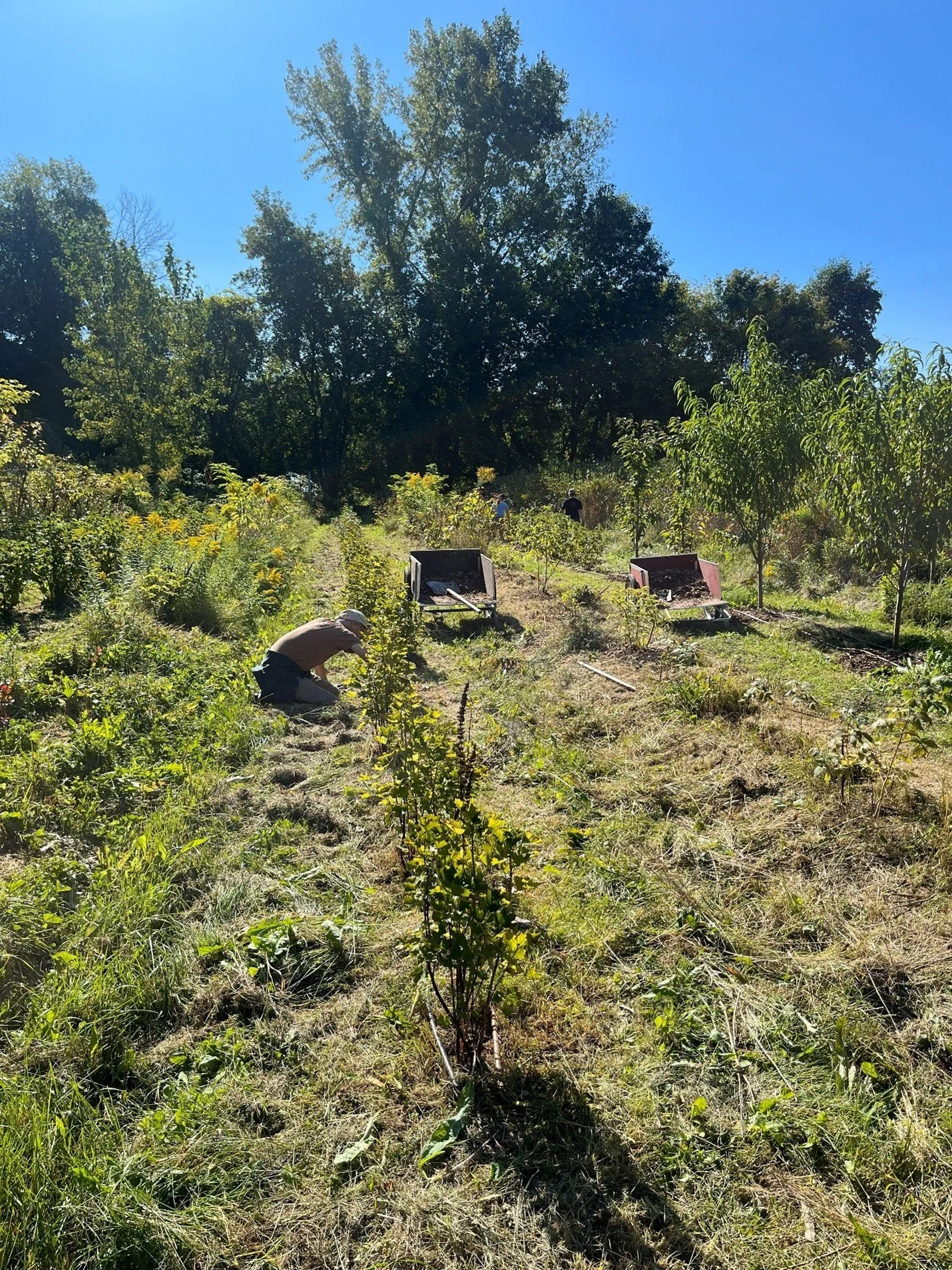
The Intervale is a floodplain, so flooding is natural and expected. Food grows so well here because of the rich sediment deposited on the land by flood events that have accumulated over thousands of years. However, we have seen an increase in the frequency of major flood events, like those in ’23 and ’24. When floods wipe out annual crops, it can directly affect farmer livelihoods, food availability, and access for the community’s food needs.
Once a crop is touched by floodwaters, the produce is considered compromised and is no longer viable for sale. Reaching heights upwards of 20’ tall, well above the flood line, the fruit of trees and shrubs can still be harvested and eaten when floodwaters recede. By diversifying food production in this way, some produce remains even during a major flood event. Integrating trees and shrubs provides additional agricultural and ecosystem benefits, such as soil health and stabilization, carbon sequestration, and moisture retention from shade.
Stewardship
Integrating trees and shrubs into a working farm landscape requires thoughtful planning and long-term care. Intervale land stewards Duncan Murdoch and Patrick Dunseith have been participating in NOFA-VT’s two-year Farmer Agroforestry Cohort, where they have explored how diverse agroforestry systems can build long-term farm and food system resilience.
In addition to the cohort, Duncan has been an ongoing contributor to VT Farm to Plate’s Agroforestry Priority Strategy Team, which aims to support both current and new practitioners of agroforestry across the state.
Through this work, Duncan and Patrick have completed the design and planting of an agroforestry buffer along the Winooski River which will produce elderberry and aronia for years to come. This winter, planning is underway for 225 additional trees and plants to expand the People’s Orchard.
The People’s Orchard
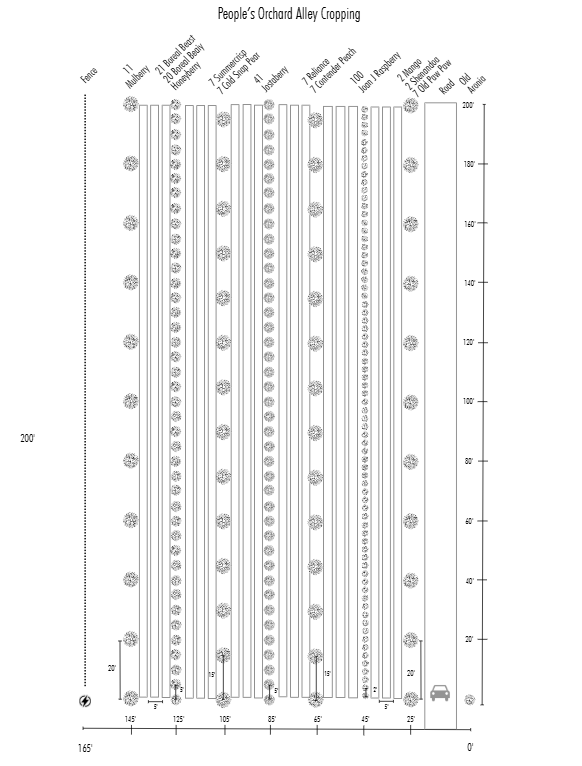
The People’s Orchard, the Intervale Center’s food forest for the community, is undergoing a more than half-acre western expansion using an alley cropping system design. Imagine rows of fruit trees with vegetables such as kale, carrots, and potatoes growing in the alleys between them. This dynamic system will evolve over time as the trees mature, creating a changing interplay between annual and perennial crops. The design anticipates these changes, and the stewardship team intends to learn and educate along the way as we experiment with growing annuals and fruit trees side by side in the People’s Orchard.
Building on the success of the People’s Farm—a community-powered organic vegetable and flower farm of the Intervale Center—the land stewardship team plans to engage volunteers in cultivating these fruits and berries, making the orchard both a food-producing landscape and a hands-on learning space. Volunteers learn farming skills, build new relationships, and help harvest food that will be distributed through Fair Share, the Intervale Center’s free food distribution and other local distribution networks.
What’s Being Grown at the People’s Orchard?:
• Peach
• Apple
• Pear
• Paw Paw
• Mulberry
• Seaberry
• Chestnut
• Elderberry
• Aronia
• Black Currant
• Red Currant
• Jostaberry
• Gooseberry
• Serviceberry
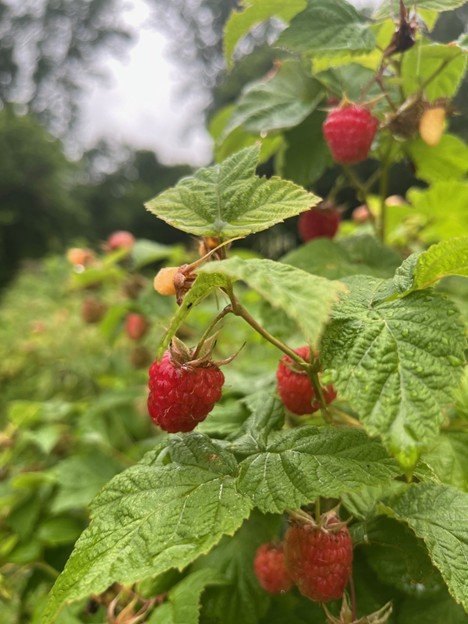
• Raspberry
• Honeyberry
Support the Growth
Want to learn more about these plants and be part of this growing effort? The Intervale Center needs volunteers to help with planting, pruning, watering, and harvesting. Sign up HERE to be on the mailing list.
Thank you to the volunteers, farmers, and donors who help the Intervale Center innovate ways to heal land, grow food, and feed our community.